
















Every NDIS software demo looks impressive. Sales teams show you clean dashboards, fast rostering, and confident answers to every question you ask.
The real differences only show up once you map each platform against your own operations, your provider size, your compliance load, and your growth plans.
This guide compares five platforms used by Australian NDIS providers: Supportly, Lumary, ShiftCare, CareMaster, and Brevity. We built it to help you make a decision, not to replace your own evaluation.
How We Compared These Platforms
We assessed each platform against six criteria that matter most to operations leads: pricing model, compliance automation depth, rostering capability, integration options, support model, and fit for medium-to-large providers.
We pulled details from vendor documentation, published reviews, and public pricing pages. Where a vendor doesn't publish pricing, we note that clearly rather than guessing.
This comparison focuses on providers running 20 or more support workers, since that's where platform differences become operationally significant.

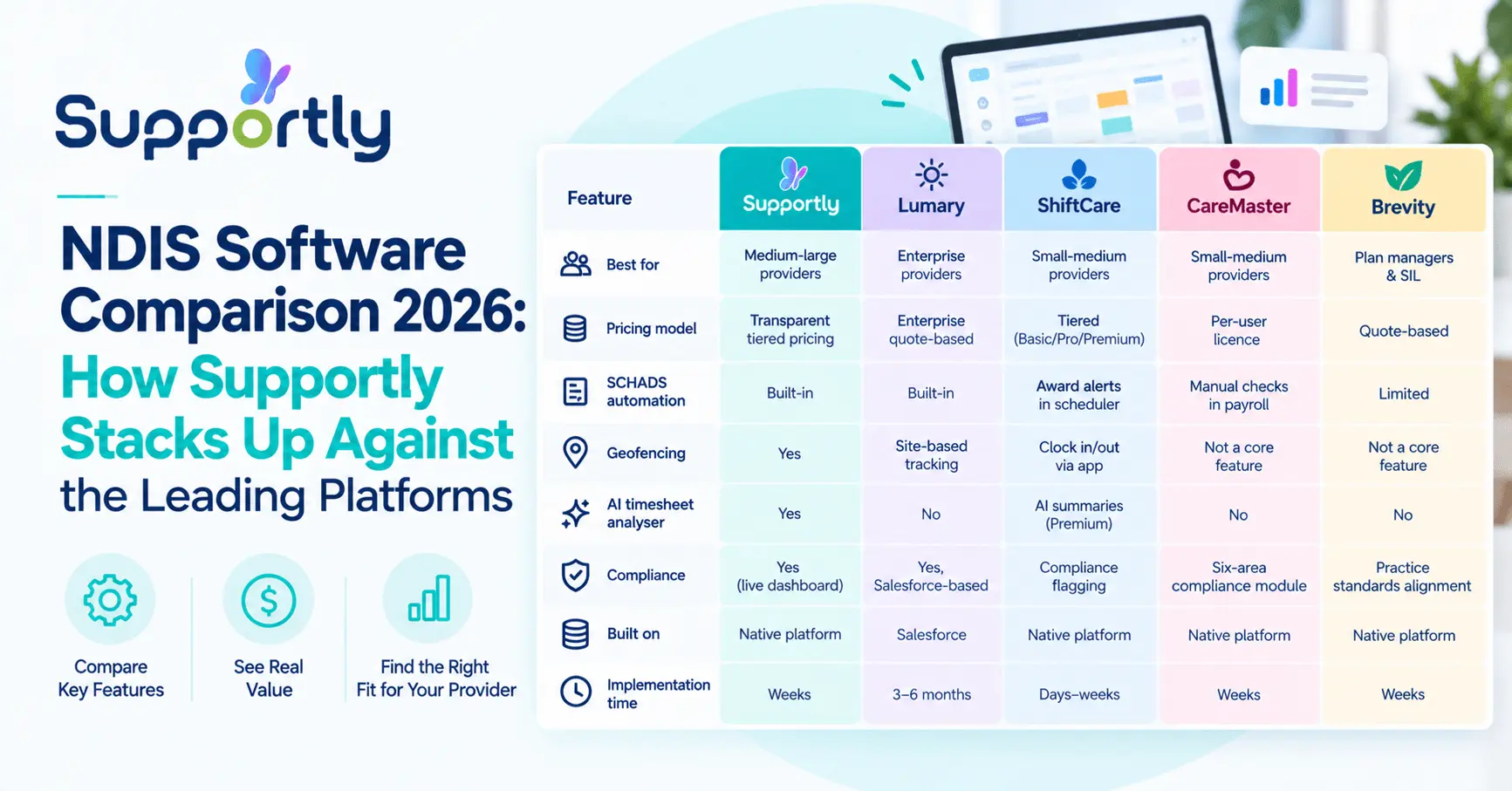
NDIS Software Comparison Table
Platform-by-Platform Breakdown
Lumary. Lumary is built natively on Salesforce and connects participant management, workforce rostering, SCHADS award interpretation, billing, compliance, and financial reporting in one system for disability, aged care, and allied health providers. Its enterprise-tier pricing sits above alternatives like ShiftCare, and implementation typically takes three to six months for complex organisations. It suits large, complex providers who need Salesforce-grade infrastructure and have the budget and time to match.
ShiftCare. ShiftCare auto-updates NDIS pricing, lets providers send bulk claims, and helps flag non-compliant hours and missing allowances in the roster in real time. Its Premium tier adds care plans, incident management, medication tracking, and SCHADS alerts in the scheduler. It works well for smaller teams, though several reviewers note costs climb quickly once a provider needs the higher tiers.
CareMaster. CareMaster addresses both NDIS requirements and general business operations, covering scheduling, payroll, HR, auditing, business analysis, and logistics, with pricing based on user licences. It structures compliance around six NDIS-defined areas, including accurate claims and conflict-of-interest management. It's a reasonable generalist option, but it lacks purpose-built automation for SCHADS interpretation and AI-driven checks.
Brevity. Brevity is a Registered NDIS Partner that automates much of the manual work in processing supplier invoices, including OCR extraction from emailed invoices. It centralises client records, medical history, and family details in one place. Brevity leans hardest into plan management and SIL workflows rather than broad operational rostering, so it fits a narrower use case than the other platforms here.
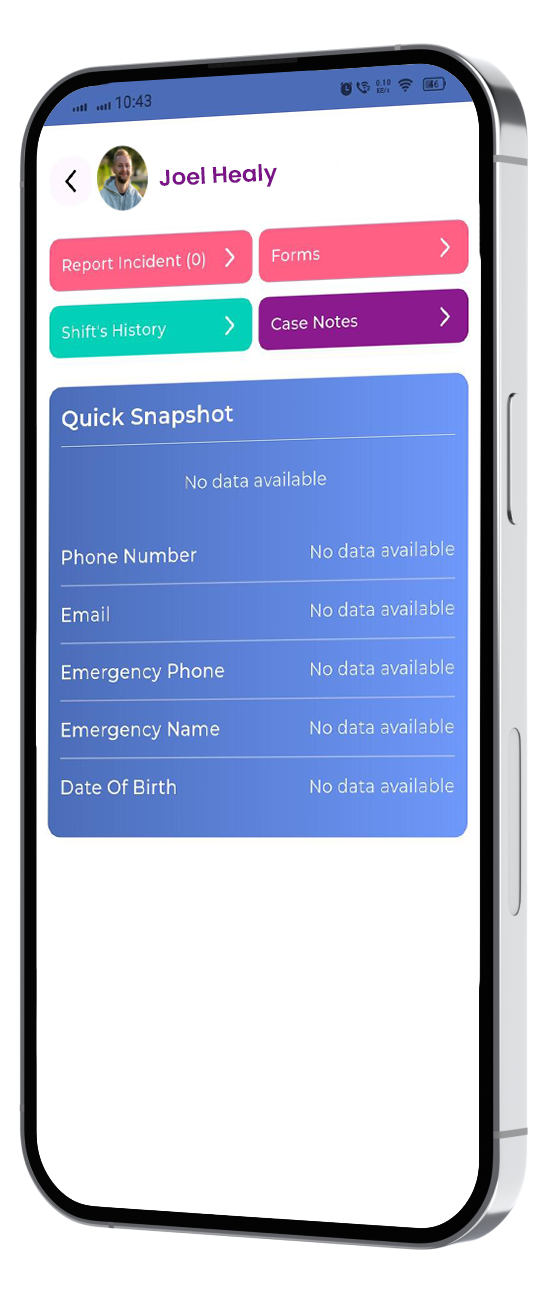
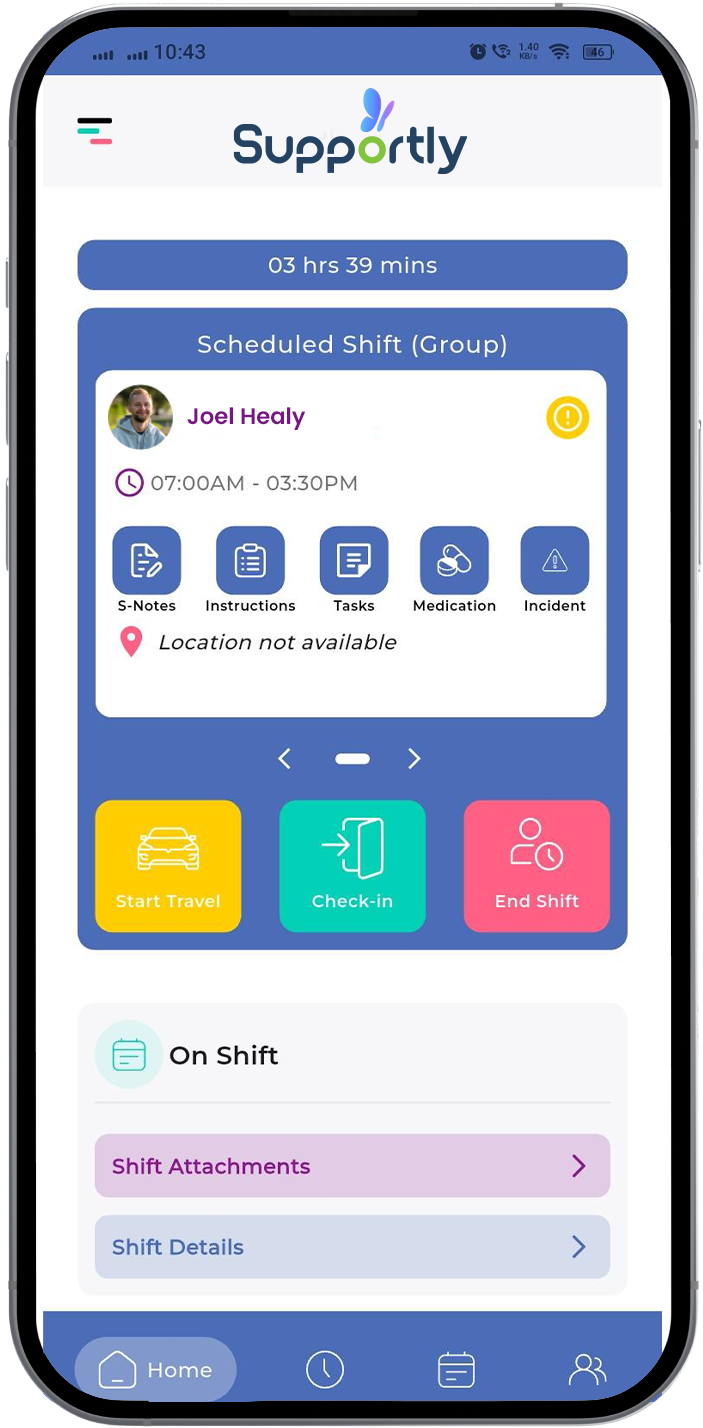
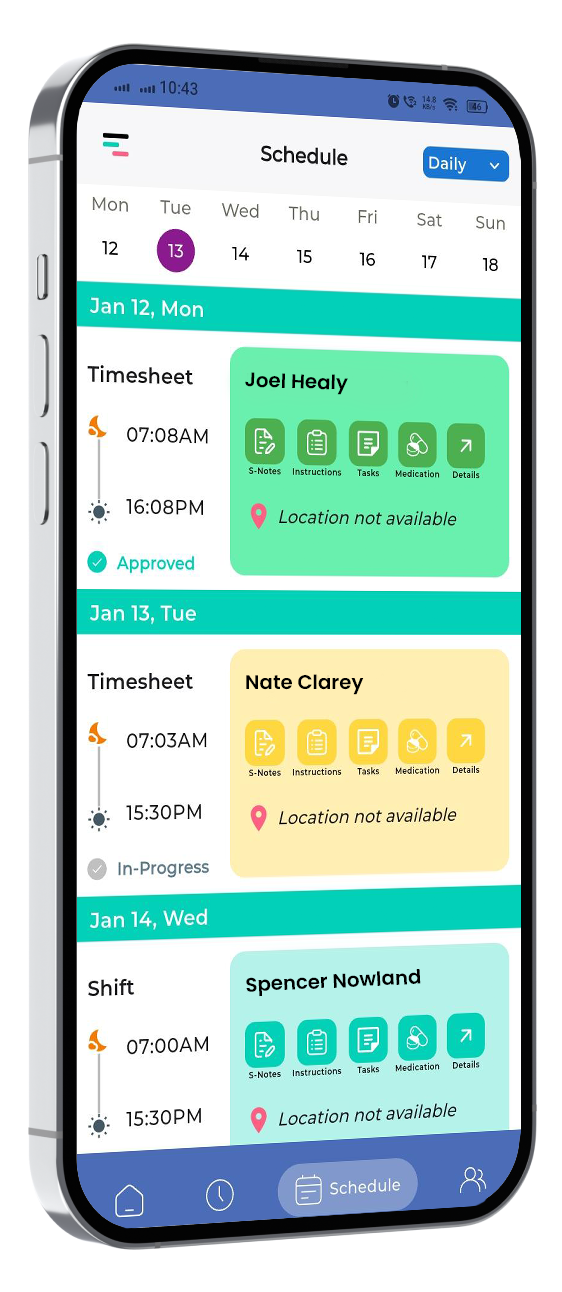
Supportly. Supportly (formerly Vertex360) connects rostering, billing, compliance, and workforce management in one system built specifically for medium-to-large Australian NDIS providers. It automates SCHADS award interpretation, tracks worker location through geofencing, and flags timesheet discrepancies with an AI analyser before they become audit risks.
Why Supportly Wins for Medium-to-Large NDIS Providers
Providers running 20 or more support workers face a specific set of problems. Rosters get complex fast. Award interpretation errors get expensive fast. Compliance evidence needs to be audit-ready, not reconstructed after the fact.
Supportly's connected system means rostering, billing, and compliance data live in one place, not across three disconnected tools. Your team stops re-entering the same shift details in a scheduling app, then a payroll system, then a compliance spreadsheet.
SCHADS automation is built into every roster, not bolted on as an alert. Supportly calculates penalty rates, allowances, and overtime as shifts are built, so pay runs match the award without manual checking.
Geofencing confirms a support worker was physically present at a participant's location when they clocked in. This closes one of the most common gaps auditors flag: claims without location evidence.
The AI timesheet analyser scans every submitted timesheet against roster data, award rules, and funding categories before it reaches payroll. It flags mismatches early, when they're a two-minute fix, not a two-week investigation.
The compliance dashboard gives operations leads a live view of incidents, document expiries, and audit-readiness across every site. You see gaps before an auditor does, not during the audit. It tracks your records against the NDIS Practice Standards that auditors assess you on.
Providers who outgrow small-team tools like ShiftCare, but who don't need or can't justify an enterprise Salesforce build like Lumary, sit in exactly the gap Supportly was built to fill.
How to Use This Comparison in Your Evaluation
Start with your organisation's size and growth trajectory. Under 20 support workers with simple rostering needs points toward ShiftCare or CareMaster. Large, complex, multi-service providers with enterprise budgets point toward Lumary.
Next, weigh your compliance complexity. If your provider has had audit findings around claims evidence, timesheet accuracy, or SCHADS interpretation, prioritise platforms with automated checks built into the roster, not added after the fact.
Finally, map your operational priorities. If plan management or SIL coordination is your core service, Brevity's specialisation may suit. If you need one connected system across rostering, billing, and compliance at medium-to-large scale, book a Supportly demo and bring this table with you.

Stop Comparing Screenshots. Start Comparing Systems.
Every platform on this list looks good in a demo. The real test is whether it holds up against your actual rosters, your actual award rates, and your next audit.
Bring your toughest rostering scenario to a Supportly demo. We'll show you exactly how SCHADS automation, geofencing, and the AI timesheet analyser handle it live, on your data.
Bring These Questions to a Supportly Demo — Book Now
Prefer the numbers first? See where Supportly sits before you book a call. View Pricing
Frequently Asked Questions
What's the main difference between Supportly and Lumary?
Supportly is built as a native platform specifically for medium-to-large NDIS providers, with faster implementation than Lumary's Salesforce-based enterprise build. Lumary suits very large, complex organisations with the budget and timeframe for a longer rollout.
How does Supportly's pricing compare to ShiftCare and CareMaster?
Supportly uses transparent tiered pricing rather than a quote-only model. ShiftCare and CareMaster also publish tiered or per-user pricing, though ShiftCare's costs rise noticeably once providers need Premium-tier compliance features. Current NDIS rates are set in the NDIA's pricing arrangements, which any platform you pick should apply automatically.
How complex is migrating from another NDIS platform to Supportly?
Most providers migrate participant records, rosters, and worker data within a matter of weeks, not months. Supportly's onboarding team handles data migration and SCHADS configuration as part of setup.
Can I see a live demo before switching platforms?
Yes. Supportly offers guided demos built around your actual roster complexity and compliance requirements, so you can test the platform against your real operational questions.
Which platform is best for a provider with 30–80 support workers?
This is the range where Supportly, ShiftCare Premium, and CareMaster most directly compete. Providers in this segment should weigh SCHADS automation depth and geofencing capability most heavily, since manual workarounds become expensive at this scale.